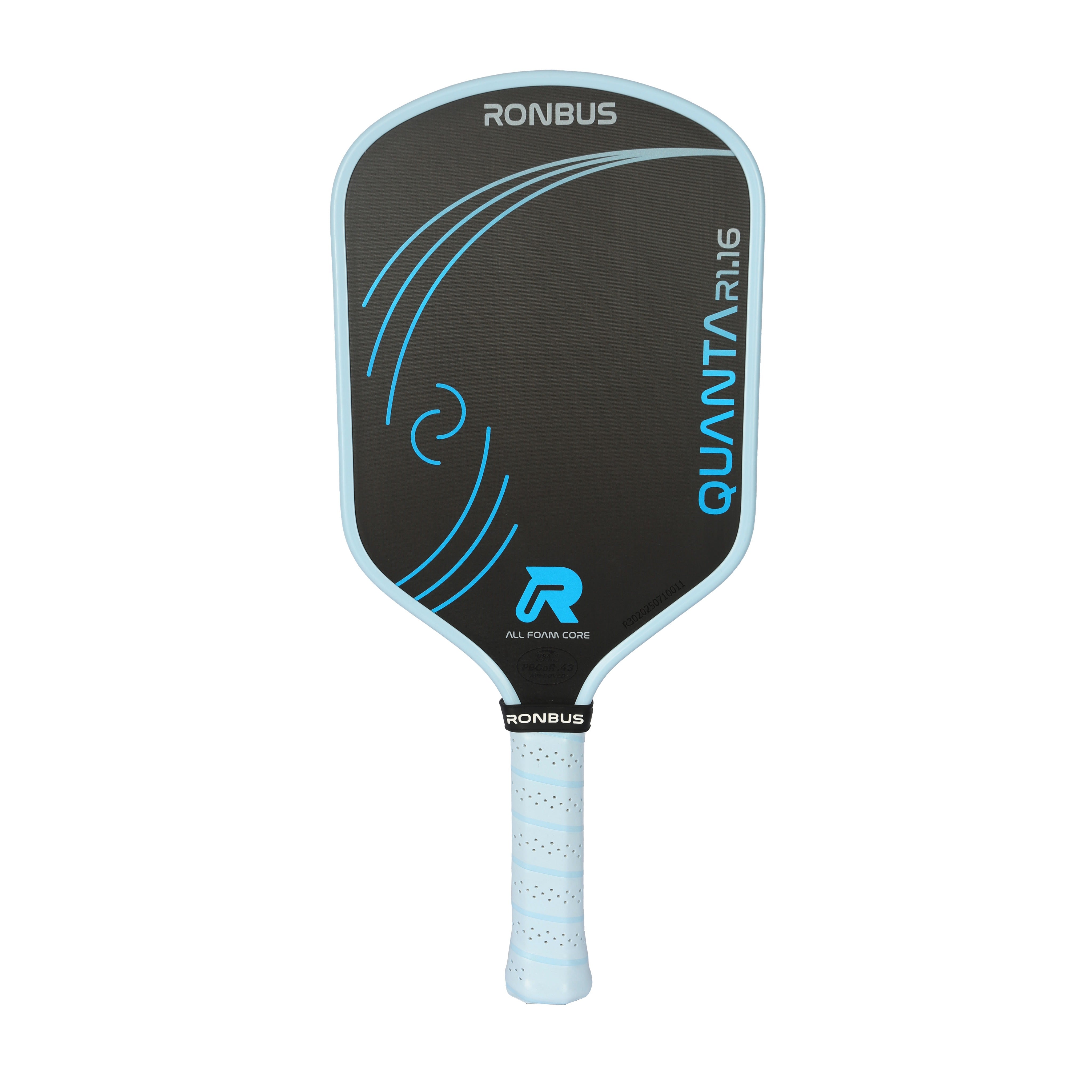
Lead tape is the most powerful and most misunderstood customization tool in pickleball. A few grams of tape in the right place can transform a paddle. A few grams in the wrong place can ruin one. This guide covers everything you need to know.
Why Lead Tape Works
Every paddle has a balance point — the spot where the paddle would balance perfectly on your finger if you held it horizontally. Adding weight changes that balance point, which changes how the paddle feels to swing and how it performs on contact.
The key concept is swing weight — the resistance you feel when swinging the paddle. A heavier swing weight means more momentum behind each shot (more power, more plow-through). A lighter swing weight means faster hands and more maneuverability.
Lead tape lets you adjust both the total weight and the balance point independently, which is something you can't do by simply buying a heavier paddle.
The Clock System
The most useful way to think about lead tape placement is the clock system. Imagine your paddle face as a clock, with 12 at the top (tip of the paddle) and 6 at the bottom (throat, where the handle meets the face).
| Position | Effect |
|---|---|
| 12 o'clock | Maximum swing weight increase. More power on drives, serves, overheads. Slower hands. |
| 3 and 9 o'clock | Balanced power increase. Wider sweet spot. More stability on off-center hits. |
| 6 o'clock | Shifts balance toward handle. Faster hands. More maneuverability at the kitchen. |
How Much to Use
Less is more when you're starting out. Lead tape is dense — 1 gram of tape goes a long way.
Beginner setup: 2–3 grams total, split evenly at 3 and 9 o'clock. This is the most forgiving starting point. It adds stability and a touch of power without dramatically changing the swing feel.
Intermediate setup: 4–6 grams total. You can start experimenting with placement at this point — more at 12 for power, more at 6 for speed.
Advanced setup: 6–10+ grams. At this level, you know exactly what you want. Most advanced players have a specific weight and balance point they've dialed in over time.
Placement Strategies by Play Style
For the doubles player who lives at the kitchen: Start with 2g at 3 and 9. If you want faster hands, add 1g at 6 and remove 1g from the sides. The goal is a paddle that feels quick and maneuverable without sacrificing stability on resets.
For the baseline-heavy player: Add weight at 12 o'clock. Even 2–3g at the tip dramatically increases plow-through on drives. Be prepared for slightly slower hands — this is the trade-off.
For the all-around player: The 3 and 9 setup is your friend. It's the most balanced placement and the easiest to fine-tune. Start here and adjust from there.
Practical Tips
Use small strips. Most lead tape comes in 1/4-inch or 1/2-inch widths. Smaller strips give you more control over placement and make it easier to add or remove weight incrementally.
Secure the edges. Lead tape can peel at the corners over time. A small piece of edge guard tape over the ends of each lead tape strip keeps everything in place.
Weigh your paddle before and after. A kitchen scale accurate to 0.1g is a worthwhile investment if you're serious about customization. Knowing exactly how much weight you've added makes it much easier to replicate a setup you like.
Give it time. Changes in swing weight take a few sessions to feel natural. Don't rip the tape off after one game because it feels different. Different is the point.
Getting Help
If you want to customize your paddle but aren't sure where to start, come into either Spinwave location. We'll assess your game, talk through your goals, and set up your paddle before you leave. It's one of the things we do best.